
The Quiet Between Alarms
Inner stillness doesn't need the noise to stop

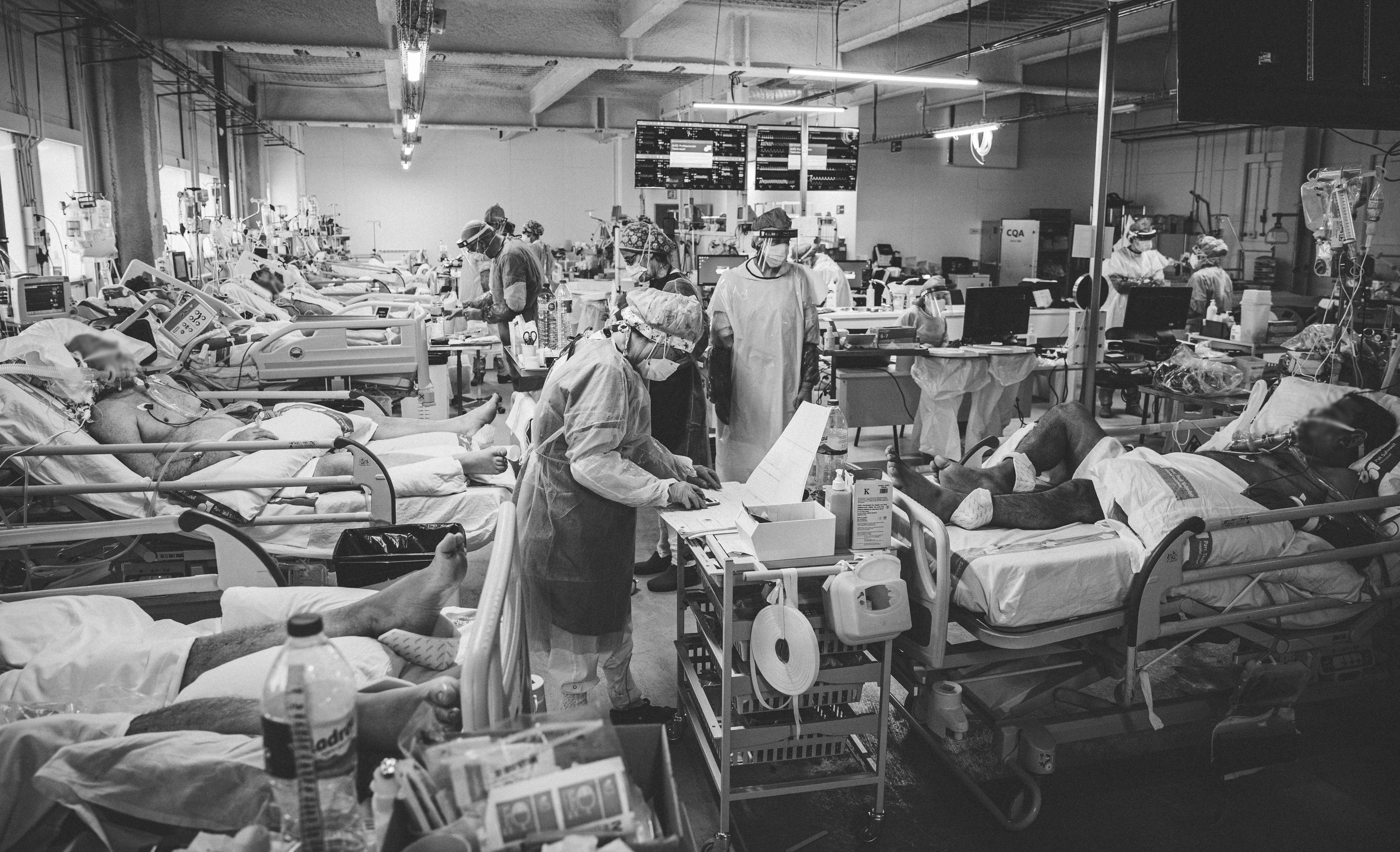
His blood pressure was 240 over something when they rolled him in. Sixty-five years old, uncontrolled hypertension for years, a heart working itself toward the edge. Flash pulmonary edema: the pressure so high it forces fluid out of the vessels and into the lungs. He’d come in confused. Now he was drowning.
The ICU got loud the way it does. Respiratory therapy at the bedside, nurses drawing up RSI medications in parallel, the ventilator circuit being assembled while I stood at the head of the bed, laryngoscope in hand. Blood pressure still climbing despite maximum Nicardipine, our go-to IV blood pressure drug. We didn’t have time to watch it anymore. We moved. I intubated him. Then down to the neck: right internal jugular, ultrasound-guided, the catheter threaded and the drip secured. Then the right wrist, the radial artery needed a catheter too. Line secured.
An hour later I was sitting at the nurses station, typing the procedure note. Still sweating. Still half in the room in my mind.
And somewhere in the middle of typing, the quiet showed up.
The ICU wasn’t silent. It’s never silent. The ventilator cycled in and out. Telemetry beeped softly through the glass doors. Someone in a room at the end of the hall called out once, then stopped. But inside me, something had settled. I don’t have a good word for it. Not calm, not peace the way that word gets used in wellness culture. More like what happens to a spinning top when it finds its center of gravity. The wobbling stops. It just turns.
It felt less like something I had done and more like something that had been there all along. I just got out of the way.
I think we have the wrong model for silence. We think silence is what’s left when you remove the noise. This is why we go to retreats, turn off the phone, close the door. Find the room where nothing is happening, and maybe there we’ll find what we’re looking for.
But the ICU teaches a different lesson, if you stay with it long enough.
The ventilator was still whirring in and out. The telemetry was still beeping. The overnight nurse was charting two beds down, and somewhere a family was crying in a waiting room. None of that went away when the quiet showed up. The quiet didn’t need any of it to stop.
Silence isn’t the absence of noise. It’s the absence of the belief that noise is a problem.
The ICU in the calm of the afternoon, the ventilator breathing for a man who couldn’t breathe, me at a screen with damp scrubs and a blinking cursor. This is not the landscape of inner stillness anyone describes in books. But the books keep pointing here anyway. They always come back to the ordinary. The dishes. The laundry. The swivel stool and the procedure note and the machine keeping a man alive three rooms away.
I’m not sure stillness is a thing you can seek. Every retreat I’ve attended, every meditation I’ve sat through, the peace comes unbidden when I drop the story that what is happening now needs to be something different. That story is constantly playing, background noise I’ve grown so accustomed to that I forget it’s running. So when it stops, when this moment doesn’t need to be anything other than what it is, I notice the stillness was already there.
I finished the note. Went back to the room to check his numbers. And the quiet was still there, just kind of hanging around.
You may not work in an ICU. But you’ve been in the loud room. The terrible phone call. The meeting that went wrong. The hour when everything happened at once and there was nothing to do but move through it.
Was there a moment, during or after when the story dropped and there was a stillness through it all?